

Best Specialty Coffee Roasters 2026: Top Picks Ranked
Table of Contents
- How We Evaluated the Best Specialty Coffee Roasters 2026
-
Top Specialty Coffee Roasters 2026: Ranked and Compared
- 1. The Last Sip Coffee Roasters - Best for Roasted-to-Order Freshness
- 2. Onyx Coffee Lab - Best for Competition-Grade Light Roasts
- 3. Intelligentsia Coffee - Best for Direct Trade Espresso
- 4. Bird Rock Coffee Roasters - Best for Award-Winning Single-Origins
- 5. Driftaway Coffee - Best Personalized Subscription Experience
- 6. George Howell Coffee - Best for Rare Micro-Lot Releases
- Best Coffee Subscription Services 2026: What to Look For
- How to Store Coffee Beans for Maximum Freshness
- How to Brew Specialty Coffee at Home Like a Pro
- Conclusion
Last Updated: August 9, 2026

Finding genuinely great specialty coffee online is difficult because most "best of" lists are affiliate-link roundups with no real evaluation. At The Last Sip Coffee Roasters, we've spent years sourcing, roasting, and shipping freshly roasted coffee directly to customers, giving us a ground-level view of what separates truly exceptional roasters from those riding on reputation alone.
The best specialty coffee roasters in 2026 are defined by three things: roast freshness at delivery, sourcing transparency, and flavor consistency. Below, we rank the top six roasters on these criteria, plus two angles most lists ignore: home brewing equipment compatibility and direct trade transparency.

Quick Picks:
- Best Overall / Freshest Delivery: The Last Sip Coffee Roasters, roasted to order, every time
- Best for Light Roast Competition Fans: Onyx Coffee Lab, meticulous, award-winning profiles
- Best for Direct Trade Espresso: Intelligentsia Coffee, pioneered the model, still executes it well
- Best for Award-Winning Single-Origins: Bird Rock Coffee Roasters, multiple US Roasting Championship titles
- Best Personalized Subscription: Driftaway Coffee, named 2026 Macro Roaster of the Year by Roast magazine
- Best for Rare Micro-Lots: George Howell Coffee, limited releases, exceptional cupping scores
How We Evaluated the Best Specialty Coffee Roasters 2026
Specialty coffee is a defined category. According to the Specialty Coffee Association's grading standards, a coffee must score 80 or above on a 100-point cupping scale to qualify as specialty grade.
Our evaluation framework covers six criteria: roast freshness (is the coffee roasted to order or warehouse-aged?), sourcing transparency (can you trace the coffee to a specific farm?), roast profile quality, brewing method compatibility, subscription value, and sustainability practices. Freshness is the single most underrated variable in home coffee quality, a bag that costs more and arrives two weeks off-roast is worse value than a fresher, modestly priced option.
Top Specialty Coffee Roasters 2026: Ranked and Compared
The six roasters below represent genuinely distinct approaches to specialty coffee.
| Roaster | Best For | Roast-to-Order | Subscription | Transparency |
|---|---|---|---|---|
| The Last Sip Coffee Roasters | Maximum freshness, all brewing methods | Yes | Yes | High |
| Onyx Coffee Lab | Light roast, pour-over, competition profiles | Yes | Yes | High |
| Intelligentsia Coffee | Direct trade espresso | Partial | Yes | High |
| Bird Rock Coffee Roasters | Award-winning single-origins | No | Yes | Medium |
| Driftaway Coffee | Personalized subscription journey | Yes | Yes | High |
| George Howell Coffee | Rare micro-lot releases | Yes | Yes | High |
1. The Last Sip Coffee Roasters - Best for Roasted-to-Order Freshness
The Last Sip Coffee Roasters earns the top spot because it solves the problem every other roaster only partially addresses: the gap between roast date and your cup. Most specialty coffee loses significant aromatic complexity within two to three weeks of roasting. Roasting to order eliminates that gap entirely.
The product range reflects careful sourcing. The Ethiopia Natural ($19.99) is a med-light roast with tasting notes of milk chocolate, fruity brightness, and floral finish. The Kenya Coffee Beans ($19.99) from Othaya, Nyeri County, deliver bright acidity and floral notes that perform exceptionally well through pour-over or Chemex. For espresso drinkers, the 6 Bean Coffee Blend ($19.99) is a dark roast house blend built specifically for espresso extraction. The Bourbon Barrel Aged Coffee ($19.99), a single-origin Guatemala aged 30 days in bourbon barrel before roasting, is genuinely unique.

New to specialty coffee? The Best Sellers Sample Pack ($24.99) includes six 2oz packs spanning blends and single-origins. The Single Origin Sample Pack ($24.99) covers six origins including Brazil Santos, Peru, and Bali.
What works: Roasted-to-order freshness is the operational model. Fast, reliable delivery means coffee arrives at peak flavor.
What to know: Because every order triggers a fresh roast, lead times are slightly longer than buying pre-roasted inventory. Plan a day or two ahead.
2. Onyx Coffee Lab - Best for Competition-Grade Light Roasts
Onyx Coffee Lab approaches quality control with exceptional rigor. Each coffee is cupped at two, five, and ten days post-roast to map its aging profile. Team members have placed at US and World Barista Championships, and that competition-grade sensibility shows in the cup. Their subscription service saves five percent on recurring orders with flexible weekly, bi-weekly, or monthly cadences.
What works: Transparency on farm origins, production costs, and payment terms. Genuinely rare and experimental offerings alongside the core lineup.
What to know: The focus on lighter roast profiles means dark roast drinkers will find limited options. Premium pricing reflects the quality.
3. Intelligentsia Coffee - Best for Direct Trade Espresso
Intelligentsia Coffee pioneered direct trade sourcing in the US specialty coffee industry, establishing direct relationships with coffee growers before most roasters knew what the term meant. Their Black Cat Classic Espresso ($17.50 for a 12oz bag) is one of the most consistently reviewed espresso blends in the country, offering reliable flavor across different espresso machine setups.
What works: Consistent quality, wide roast level range, and a subscription service that rotates seasonal blends and single-origins.
What to know: Some longtime customers note that quality consistency has varied in recent years. Worth monitoring across a few orders before committing to a subscription.
4. Bird Rock Coffee Roasters - Best for Award-Winning Single-Origins
Bird Rock Coffee Roasters has won multiple US Roasting Championship titles and has been part of the specialty coffee movement since 2002. That track record reflects a sourcing philosophy built around the Cup of Excellence program, which identifies the highest-scoring lots through rigorous blind cupping. When Bird Rock lists a coffee, the cupping score behind it is real and traceable.
What works: Exceptional sensory quality on their best lots. Diverse range of flavor profiles across origins and processing methods.
What to know: Pricing varies by availability. Micro-lots disappear fast.
5. Driftaway Coffee - Best Personalized Subscription Experience
Driftaway Coffee earned Roast magazine's 2026 Macro Roaster of the Year award. As an immigrant-owned, woman-led roastery, Driftaway has built its model around personalization, education, and full pricing transparency. Virtual tastings, detailed origin information, and compostable packaging are standard. They support women- and minority-owned farms and publish detailed information on coffee pricing, a practice that remains rare in the industry.
What works: If you want to learn while you drink, no subscription service on this list teaches you more about what's in your cup.
What to know: Primarily subscription-based. One-time purchases are limited, so this model suits consistent drinkers more than occasional buyers.
6. George Howell Coffee - Best for Rare Micro-Lot Releases
George Howell is a foundational figure in American specialty coffee, and the roastery reflects that pedigree. The focus is on high-scoring micro-lots and limited releases with exceptional sensory quality. Their Worka Chelbessa from Ethiopia ($26.00 for a 12oz bag) is a benchmark washed-process Ethiopian. Free shipping on orders over $50 and subscription discounts make pricing more manageable for regular buyers.
What works: Access to genuinely rare, high-cupping-score coffees.
What to know: Very high price point on some offerings. Not ideal for casual drinkers or those new to specialty coffee.
Best Coffee Subscription Services 2026: What to Look For
The best coffee subscription services are defined by four variables: roast freshness at delivery, customization depth, sourcing transparency, and cancellation flexibility. Most subscription failures stem from one issue: the coffee arrives stale.
Before subscribing, evaluate: Does the roaster roast-to-order or use pre-roasted inventory? Can you customize roast level, grind size, bag weight, and delivery frequency? Does the roaster publish farm origin, processing method, altitude, and harvest season? Can you pause or cancel easily? Does packaging use compostable or recyclable materials with valve-sealed bags?
According to the National Coffee Association's annual drinking trends report, home coffee consumption in the US has remained at historically high levels post-pandemic, with specialty coffee driving growth. That demand has produced a crowded subscription market where buyers can demand transparency and flexibility.
How to Store Coffee Beans for Maximum Freshness
Proper coffee bean storage is the difference between a vibrant, complex cup and a flat, stale one. Coffee's enemies are oxygen, moisture, heat, and light.
An airtight container with a one-way CO2 valve is the gold standard. The valve allows carbon dioxide released by freshly roasted beans to escape without letting oxygen in. Avoid clear glass jars. Do not refrigerate whole beans, the refrigerator introduces moisture through condensation. Freezing is acceptable for long-term storage of unopened bags (more than three weeks' worth), but once opened, keep beans at room temperature in an airtight container and use within two to three weeks.
Grind only what you need immediately before brewing. A burr grinder produces more consistent particle size than a blade grinder. Buy in quantities you'll consume within two weeks, this is the single most practical freshness tip. The Last Sip Coffee Roasters' sample packs, six 2oz bags for $24.99, let you rotate through different origins without any single bag going stale.
| Storage Method | Freshness Window | Best For |
|---|---|---|
| Airtight container, room temp | 2-3 weeks post-roast | Daily drinkers, whole bean |
| Sealed original bag with valve | 2-4 weeks post-roast | Short-term, occasional use |
| Freezer (unopened bag) | Up to 3 months | Bulk buying, long-term storage |
| Refrigerator | Not recommended | N/A, introduces moisture |
| Open bowl or jar | 3-5 days maximum | Avoid entirely for quality |
How to Brew Specialty Coffee at Home Like a Pro
Brewing specialty coffee at home well is less about equipment cost and more about controlling three variables: grind size, water temperature, and brew ratio.
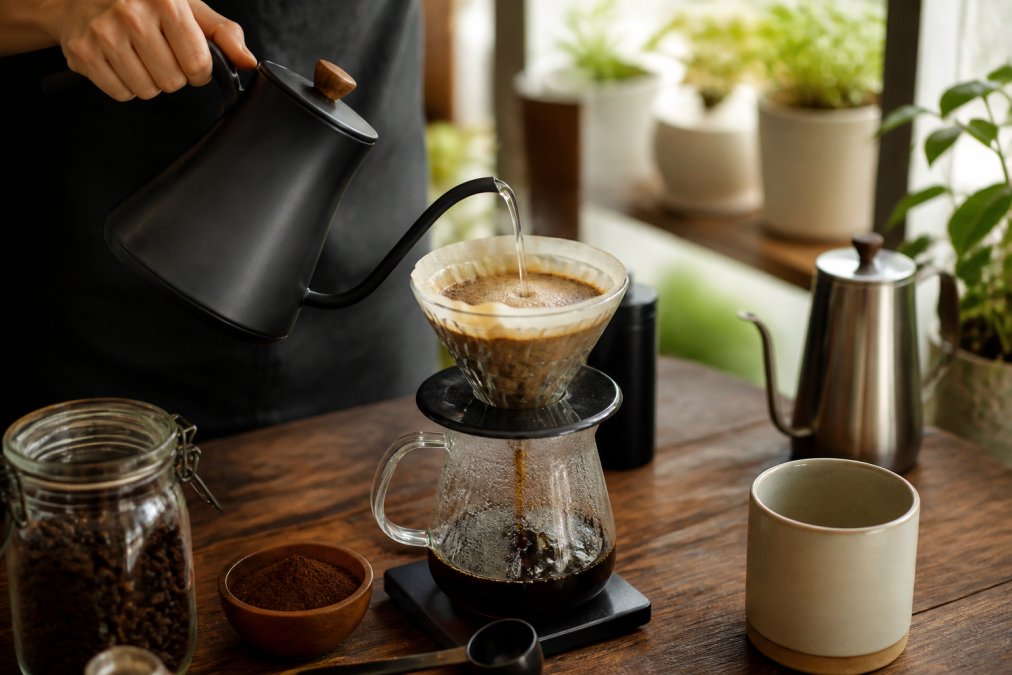
Most home brewing failures trace back to grind too coarse (under-extraction, weak and sour), water too hot (over-extraction, bitter), or ratio off (too strong or too diluted).
Water temperature: Specialty coffee extracts best between 195°F and 205°F (just off boil). Let your kettle rest for 30 seconds after boiling, or use a variable-temperature kettle set to 200°F.
Brew ratio: A starting point of 1:15 (one gram of coffee to 15 grams of water) works for most pour-over and drip methods. Adjust to taste.
The bloom: For pour-over and French press, always bloom your grounds first. Pour twice the weight of coffee in water, wait 30 to 45 seconds for CO2 to release, then continue your pour.
According to the Specialty Coffee Association's brewing standards, optimal extraction yield falls between 18 and 22 percent of the coffee's soluble compounds, a range that produces balanced flavor.
Matching Your Roaster to Your Brewing Method
The roast profile should guide your brewing method choice, a detail most subscription services fail to communicate.
Light roasts (like Onyx Coffee Lab's single-origins or The Last Sip's Kenya AA) have higher density and require more heat and contact time. Pour-over and Chemex methods suit light roasts well.
Medium roasts (like The Last Sip's Peru Single-Origin at $19.99) are the most versatile. They perform well across pour-over, drip, AeroPress, and espresso.
Medium-dark and dark roasts (like The Last Sip's Bali Blue at $19.99) extract more easily and suit French press, espresso, and moka pot.
Espresso-specific blends need consistent grind size and pressure. The Last Sip's 6 Bean Blend is built for espresso extraction.
| Roast Level | Recommended Method | Grind Size | Water Temp | Example Coffee |
|---|---|---|---|---|
| Light | Pour-over, Chemex | Medium-fine | 200-205°F | The Last Sip Kenya AA |
| Medium | Drip, AeroPress, pour-over | Medium | 195-200°F | The Last Sip Peru |
| Medium-Dark | French press, moka pot | Medium-coarse | 195°F | The Last Sip Bali Blue |
| Dark | Espresso, French press | Fine (espresso) / Coarse (press) | 195°F | The Last Sip 6 Bean Blend |
The specialty coffee market rewards buyers who ask harder questions: When was this roasted? Who grew it? What processing method was used, and why? The roasters on this list have earned their spots by answering those questions honestly.
The Last Sip Coffee Roasters takes that commitment further by roasting every order fresh, no pre-roasted inventory, no guessing on roast dates. Explore the Best Sellers Sample Pack or the Single Origin Sample Pack to find your preferred roast profile before committing to a full bag. Get started with The Last Sip Coffee Roasters and taste the difference that roasted-to-order freshness actually makes.
Frequently Asked Questions
What makes a coffee roaster 'specialty'?
A specialty coffee roaster sources beans that score 80 or above on the Specialty Coffee Association's 100-point cupping scale. Beyond the score, true specialty roasters maintain traceability from farm to cup, publish sourcing details including origin, altitude, processing method, and harvest season, and roast in small batches to preserve each bean's unique flavor complexity. The result is a noticeably cleaner cup with distinct tasting notes rather than the flat, generic profile common in commercial-grade coffee.
How do I choose the best coffee subscription for my taste?
Start by identifying your preferred roast level: light roasts tend toward bright acidity and fruit-forward flavors, while dark roasts deliver heavier body and lower acidity. Then match the subscription to your brewing method, since espresso extraction and pour-over each reward different roast profiles and grind sizes. Check whether the roaster ships freshly roasted beans and publishes a roast date. Finally, look for flexible frequency options so you receive coffee at the pace you actually drink it, avoiding stale beans sitting unused.
How long does specialty coffee stay fresh after roasting?
Freshly roasted specialty coffee is at peak flavor between 4 and 14 days after the roast date, once the initial CO2 off-gassing from the coffee bloom subsides. Stored correctly in an airtight container away from light and heat, whole beans remain enjoyable for up to 4 weeks. Ground coffee degrades significantly faster, losing most of its flavor complexity within a few days. For the best cup, buy whole beans roasted to order and grind only what you need immediately before brewing.
Is specialty coffee worth the higher price compared to grocery store beans?
For most coffee drinkers who brew at home, yes. Specialty-grade beans are grown at higher altitudes, processed with greater care, and roasted in smaller batches to develop specific flavor profiles rather than mask defects with a dark roast. The difference shows clearly in the cup: distinct tasting notes, cleaner finish, and more consistent results across brewing methods. When you factor in cost per cup, a $20 bag of freshly roasted single-origin coffee brewed at home typically costs less per serving than a daily café visit.
Where can I buy award-winning specialty coffee online?
Several top-rated roasters ship directly to your door. The Last Sip Coffee Roasters roasts every order fresh before shipping, offering single-origin coffees like their Ethiopia Natural and Kenya AA alongside sample packs that let you explore multiple origins at once. Other well-regarded options include Onyx Coffee Lab, known for competition-grade light roasts, and Bird Rock Coffee Roasters, a multi-time US Roasting Championship winner. Buying direct from the roaster's website generally guarantees the freshest roast date compared to third-party retailers.
This article was written using GrandRanker