

How Long Does Roasted Coffee Stay Fresh?
Table of Contents
- How Long Roasted Coffee Stays Fresh: A Quick Reference
- Understanding Your Coffee Roast Date
- What Kills Freshness: Oxygen, Light, Heat, and Moisture
- The Best Way to Store Coffee Beans at Home
- Freezing Coffee Beans: Does It Actually Work?
- Signs of Stale Coffee Beans You Should Know
- Why Roasted-to-Order Coffee Stays Fresh Longer
- Conclusion
Last Updated: August 8, 2026
How Long Roasted Coffee Stays Fresh: A Quick Reference
Knowing how long roasted coffee stays fresh is essential for home brewers. The short answer: whole bean coffee is at its best within 2 to 4 weeks of the roast date, while ground coffee begins losing flavor within days. Brewed coffee, on the other hand, is best consumed within a few hours, or within 12-24 hours if it is covered and refrigerated. Below, we'll break down exactly why that window exists, what shortens it, and how to protect every bag you buy.
Whole Bean vs. Ground Coffee Shelf Life
Grinding dramatically increases surface area exposed to oxygen, accelerating oxidation and causing aroma and flavor compounds to dissipate rapidly. Ground coffee is most flavorful right after grinding, and a pre-ground bag stored at room temperature loses much of its character within 1 to 2 weeks of opening.
Whole coffee beans hold their structure and protect volatile oils inside. A well-sealed bag of whole beans can stay within an acceptable freshness window for up to a month, though the best flavor comes sooner.
| Coffee Type | Peak Freshness Window | Acceptable Range | After Opening |
|---|---|---|---|
| Whole bean | 7-21 days post-roast | Up to 4 weeks | Consume within 2 weeks |
| Ground coffee | 1-3 days post-grind | Up to 1 week | Consume within 3-5 days |
| Vacuum-sealed whole bean | Up to 3-6 months (unopened) | Declines after opening | Same as whole bean |
| Frozen whole bean (portioned) | 3-6 months | Stable if sealed | Use immediately after thawing |
Practical takeaway: Grind only what you need, immediately before brewing.
How Roast Profile Affects the Freshness Window
Roast profile directly affects how long your beans stay fresh.
Lighter roasts are denser, retain more moisture, and release carbon dioxide more slowly after roasting. They often need 5 to 10 days post-roast before they're ready to brew, especially for espresso. Their flavor profile holds up well for 3 to 4 weeks.
Dark roasts behave differently. Extended heat exposure breaks down cell structure and accelerates degassing, causing oils to migrate to the bean surface. Those glossy beans are a sign oxidation is already underway. Dark roasts hit their peak within 4 to 7 days but stale faster, with a freshness window of around 2 weeks.
Medium roasts fall in between: a 3 to 5 day rest, then a peak window of 2 to 3 weeks.
Understanding Your Coffee Roast Date
Roast Date vs. Expiration Date: What the Label Is Actually Telling You
A roast date tells you when the beans were roasted and lets you calculate where you are in the freshness window.
An expiration date (sometimes labeled "best by") is a food safety marker. It tells you the product won't make you sick if stored properly, but says almost nothing about whether the coffee still tastes good. Many commercial bags carry "best by" dates 12 to 18 months from roasting. By that point, cup quality has long since declined.
According to the Specialty Coffee Association's guidance on freshness standards, freshness is defined by sensory experience, not safety timelines. A bag that's technically "safe" at 12 months can still taste like cardboard.
Always buy from roasters who print the roast date, not just an expiration date.
Degassing: Why Freshly Roasted Coffee Needs a Day or Two
Freshly roasted coffee is not immediately ready to brew. During roasting, beans absorb carbon dioxide, and in the days that follow, they slowly release it in a process called degassing.
Brew too soon and that outgassing carbon dioxide interferes with extraction, creating uneven saturation and a sour, underdeveloped cup. Specialty roasters recommend waiting at least 24 to 48 hours before brewing, and up to a week for espresso.
Quality coffee bags use one-way valve packaging. The valve allows carbon dioxide to escape without letting oxygen in, protecting the beans during the early degassing phase.
What Kills Freshness: Oxygen, Light, Heat, and Moisture
Four environmental factors destroy coffee freshness.
Oxygen is the primary enemy. Once beans are exposed to air, oxidation begins immediately, breaking down the aromatic compounds responsible for flavor.
Light accelerates degradation of coffee oils and aromatic compounds. UV exposure is particularly damaging, which is why specialty coffee is packaged in opaque or dark-tinted bags.
Heat speeds up every chemical reaction involved in staling. Storing coffee near a stove, oven, or warm cabinet shortens its freshness window significantly.
Moisture is the most underestimated threat. Coffee is hygroscopic and actively absorbs moisture from surrounding air. Humidity causes premature staling and is the main reason refrigerating coffee is generally a bad idea.
According to research published by the American Chemical Society on coffee oxidation, the combination of oxygen and moisture creates the most rapid flavor degradation in roasted coffee.
The Best Way to Store Coffee Beans at Home
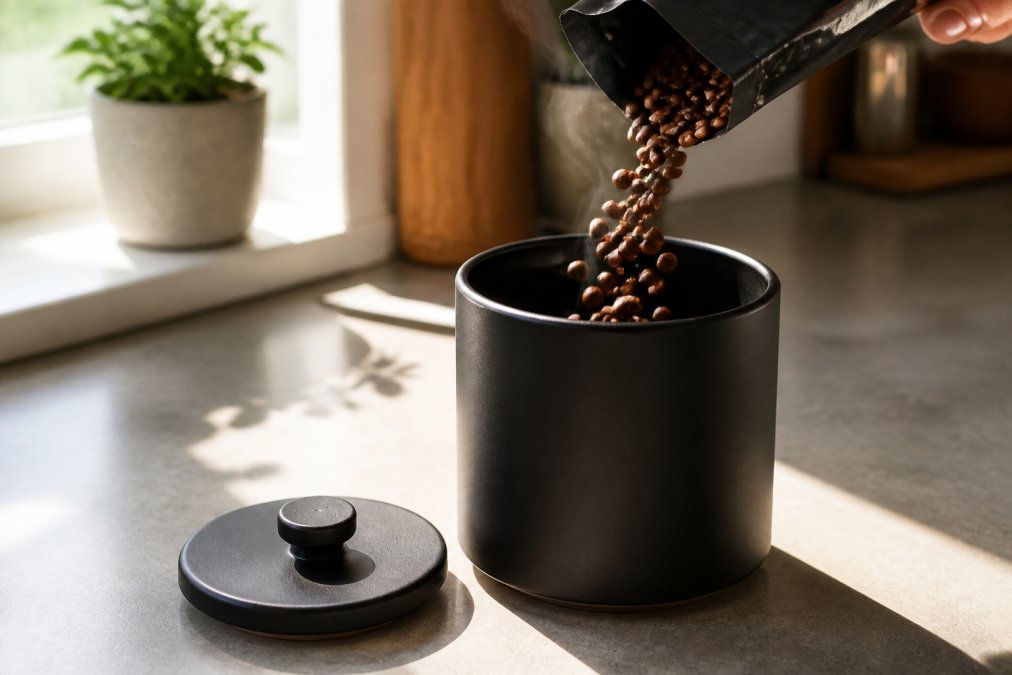
Store coffee beans in an opaque, airtight container kept at room temperature, away from heat, light, and moisture. This single change extends the freshness window more than any other storage decision.
Choosing the Right Container
The best options for home storage include:
- Ceramic canisters with airtight silicone seals: Opaque, thermally stable, and easy to clean.
- Stainless steel containers: Blocks light completely and maintains stable internal temperature. Avoid containers with clear lids.
- Specialty coffee storage canisters with one-way valves: Allows residual carbon dioxide to escape while preventing oxygen from entering.
- Original roaster packaging with a resealable one-way valve: Can work well for the first 1 to 2 weeks after opening.
Avoid plastic containers. They're porous, absorb odors, and don't provide adequate light protection.
Room Temperature Storage: Pros and Cons
Room temperature storage is the right default for most home brewers, but it comes with conditions.
Pros:
- No moisture introduction from temperature cycling
- Convenient daily access
- Preserves volatile aromatic compounds better than cold storage
Cons:
- Sensitive to kitchen heat sources
- Optimal only if your kitchen stays consistently below 70°F
- Works best for quantities you'll consume within 2 to 3 weeks
Freezing Coffee Beans: Does It Actually Work?
Freezing coffee beans works, but only when done correctly. The core issue is moisture. Coffee is highly hygroscopic, and any condensation that forms when frozen beans meet warm air introduces moisture directly into the bean structure, accelerating staling.
How to Freeze Without Freezer Burn or Humidity Damage
- Portion before freezing. Divide your beans into single-use or weekly-use portions immediately after receiving them. Never freeze and thaw the same batch multiple times.
- Use vacuum-sealed bags or airtight freezer bags with as much air removed as possible.
- Label with the roast date and freeze date. Beans frozen within the first week of roasting retain the most flavor potential.
- Thaw at room temperature, sealed. Allow the sealed bag to reach room temperature before opening to prevent condensation.
- Grind and brew immediately after thawing. Do not re-freeze.
According to food science research from the University of California on frozen food quality, maintaining consistent freezer temperatures below 0°F significantly reduces oxidation rates in organic compounds.
Which Brew Methods Benefit Most from Frozen Beans
- Espresso: High benefit. Frozen beans grind more uniformly, which can improve extraction.
- Pour-over and filter: High benefit. Light roast flavors are well-preserved by freezing.
- French press and cold brew: Moderate benefit. These methods are more forgiving of slight staleness.
- Capsule or pod systems: Low benefit. The convenience format already compromises freshness.
Signs of Stale Coffee Beans You Should Know
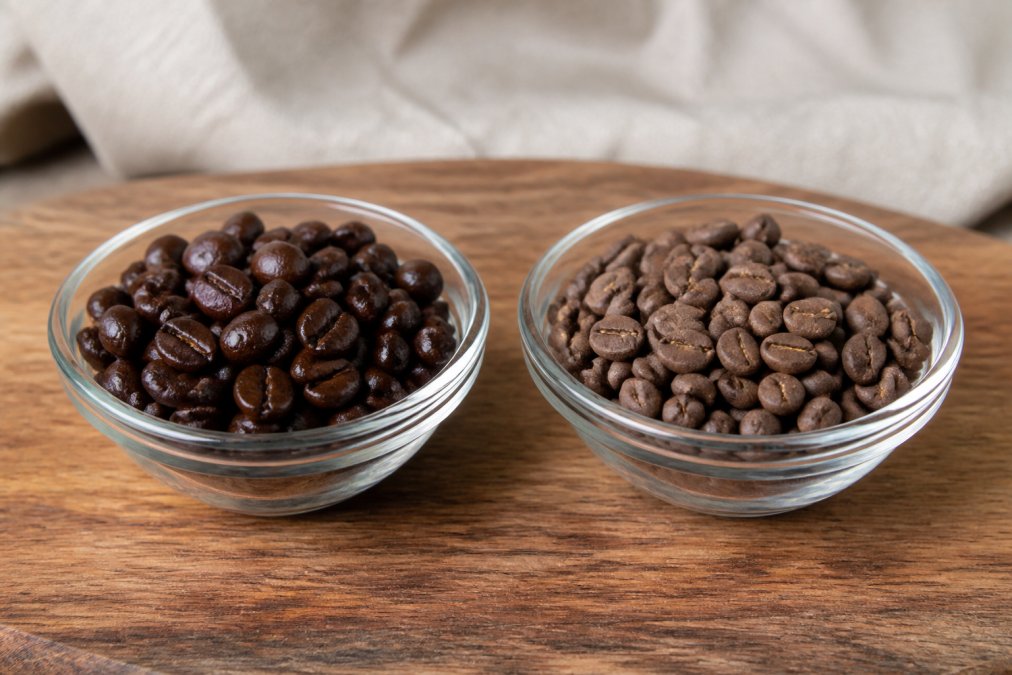
1. No aroma when you open the bag. Fresh beans smell intensely of roasted coffee. Stale beans smell faint or papery.
2. Flat or dull appearance. Fresh dark roast beans have visible sheen from surface oils. Stale dark roast looks matte and faded.
3. No bloom when brewing. Fresh grounds produce a visible bloom when hot water is poured over them. Stale coffee produces little or no bloom.
4. Weak, flat, or sour taste. Stale coffee tastes thin, papery, or oddly sour due to uneven extraction.
5. Grounds clump together. Fresh grounds have static charge from residual CO₂. Stale grounds clump, signaling moisture absorption.
Can you drink expired coffee?
Usually, yes. Coffee that is past its best by date is typically not unsafe if it has been stored properly, but it is often stale and flat. If the beans smell rancid, musty, or the package was exposed to heat and light, it is better to replace them.
Why Roasted-to-Order Coffee Stays Fresh Longer
Most coffee sold in grocery stores and online follows a batch roasting model. Beans are roasted in large quantities, packaged, and distributed through a supply chain that can add weeks or months before reaching your kitchen. By the time you open it, the optimal freshness window may already be over.
Roasted-to-order coffee solves this structurally. When a roaster only roasts after an order is placed, the beans go from roaster to your door within days. You receive coffee still in the early part of its freshness window, with full aroma and flavor intact.
At The Last Sip Coffee Roasters, every batch is roasted to order using carefully sourced beans, then shipped with fast, reliable delivery so the gap between roast date and your first brew is as short as possible. If you go through coffee slowly, a smaller, fresher batch delivered more frequently beats a large bag of older beans every time.
As the Specialty Coffee Association's standards for fresh coffee make clear, the sensory experience of coffee is fundamentally time-sensitive. Roasting to order is the most direct way to honor that.
Keeping coffee fresh is a challenge every home brewer faces, and the stakes are real: even excellent beans produce a flat, disappointing cup once they've passed their peak. The Last Sip Coffee Roasters was built around the roasted-to-order model specifically because freshness isn't a feature you can add after the fact. Get started with The Last Sip Coffee Roasters and experience the difference that a true roast date, carefully sourced beans, and fast, reliable delivery make from your very first bag.
Frequently Asked Questions
How long after the roast date is coffee at its peak flavor?
For whole bean coffee, peak flavor typically falls between 5 and 14 days after the roast date, once the initial degassing of carbon dioxide has settled. Ground coffee reaches its peak much sooner and starts losing aroma within 30 minutes of grinding. Light roasts can hold their flavor notes slightly longer than dark roasts, which release CO2 faster and oxidize more quickly. Buying roasted-to-order coffee and grinding just before brewing gives you the best shot at that optimal freshness window.
Can roasted coffee beans go bad or expire?
Roasted coffee beans won't spoil in a way that makes them unsafe to drink, but they do go stale. Oxygen exposure breaks down the aromatic compounds and coffee oils responsible for flavor, leaving a flat, papery, or even rancid taste. Whole beans stored in an airtight container at room temperature stay drinkable for up to a month, though quality drops noticeably after two weeks. Ground coffee degrades much faster. If your coffee smells dull or tastes hollow, it's past its best, even if the expiration date hasn't passed.
Does freezing coffee beans extend their shelf life?
Yes, when done correctly. Freezing whole beans in a vacuum-sealed or airtight bag can extend shelf life to two or three months without significant flavor loss. The key is to portion beans before freezing so you never refreeze a thawed batch, repeated temperature changes introduce moisture and cause freezer burn. Let frozen beans come to room temperature before opening the bag to prevent condensation. Freezing works best for long-term storage of a large batch you won't use within two to three weeks.
How can you tell if your coffee beans have gone stale?
Fresh beans have a strong, complex aroma the moment you open the bag. Stale beans smell faint, flat, or slightly musty. Visually, fresh dark roasts look oily and glossy; stale beans look dull and dry. A simple bloom test also works: pour a small amount of hot water over your grounds, fresh coffee bubbles and puffs up as CO2 escapes, while stale coffee barely reacts. If your brewed cup tastes thin, bitter without sweetness, or papery, those are clear signs the beans have passed their freshness window.
Can I drink coffee that expired 2 years ago?
If it was stored well, it may still be safe, but it will likely taste very stale. Check for off smells, rancid notes, moisture damage, or a damaged package before brewing. For the best flavor, coffee should be used long before it reaches that point.
How long does it take for coffee to go rancid?
Coffee usually stales before it truly goes rancid. With poor storage, ground coffee can lose freshness in a few hours to a few days, while whole beans stay good longer. Heat, light, air, and moisture are the biggest factors that speed up that decline.
This article was written using GrandRanker