

How to Keep Coffee Fresh Longer: A Complete Guide
Table of Contents
- The Enemies of Freshness: Air, Light, Heat, and Moisture
- Best Coffee Storage Containers and Airtight Solutions
- How Long Does Coffee Stay Fresh After Roasting?
- Whole Bean vs. Ground Coffee Storage
- Should You Freeze Your Coffee Beans?
- Common Storage Myths Debunked
- Your Coffee Freshness Action Plan
- Conclusion
Last Updated: August 12, 2026
The Enemies of Freshness: Air, Light, Heat, and Moisture
Coffee begins to lose its flavor the moment it's roasted. Four environmental factors accelerate this decline: oxygen, light, heat, and moisture.
Oxygen and oxidation are the primary culprits. When roasted coffee beans are exposed to air, oxidation breaks down the aromatic oils and flavor notes that make fresh coffee exceptional. Whole beans stay fresher than ground coffee because grinding dramatically increases surface area exposed to oxygen.
Light, particularly UV rays, degrades coffee through photodegradation. The chlorogenic acid and polyphenols in coffee are sensitive to light exposure, which is why specialty roasters package coffee in opaque containers.
Heat accelerates all chemical degradation processes. Elevated temperatures speed up oxidation, cause moisture loss, and trigger undesirable flavor changes. Storing coffee in warm kitchen cabinets or near appliances is a common mistake.
Moisture and humidity create additional problems. Excess humidity can cause mold growth and flavor dilution, while very dry environments can make beans brittle and cause aromatic compounds to evaporate.
The ideal storage environment minimizes all four factors simultaneously through proper container choice.
Best Coffee Storage Containers and Airtight Solutions
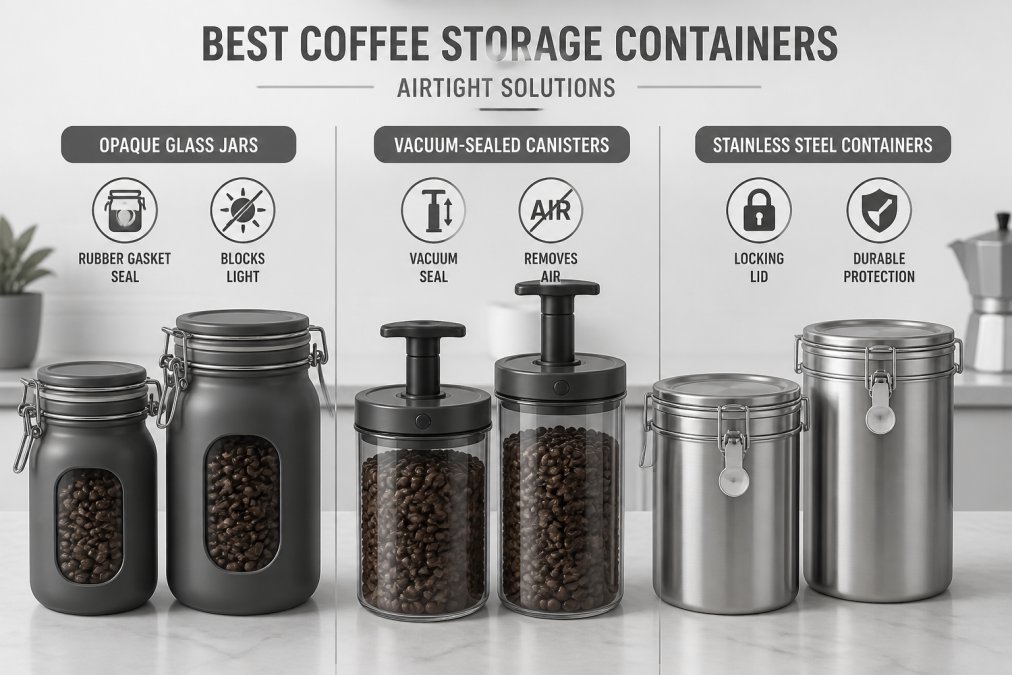
The best coffee storage containers combine opacity, airtightness, and material durability to create a stable environment for your beans.
Glass containers with rubber gasket seals are highly effective. Opaque glass blocks light completely while remaining inert and not leaching chemicals. The rubber gasket creates a genuine airtight seal when properly closed. Look for dark or frosted glass; clear glass defeats the purpose.
Vacuum-sealed containers remove most oxygen from the storage space, dramatically slowing oxidation. These containers use a hand pump or electric mechanism to extract air, making them particularly effective for long-term storage.
Stainless steel canisters with airtight lids offer durability and complete light blocking. Stainless steel doesn't absorb odors or flavors and is resistant to dents and corrosion. Ensure the lid creates a true airtight seal.
Why One-Way Valves Matter
One-way valves, also called degassing valves, allow carbon dioxide released by freshly roasted beans to escape while preventing oxygen from entering. If CO2 becomes trapped in an airtight container without a release mechanism, pressure builds and can force the seal open. Quality coffee bags from roasters often have one-way valves built in. For home storage, if you're transferring beans immediately after purchase, a one-way valve is less critical since most degassing occurs within 24-48 hours. For long-term storage, a valve prevents pressure buildup and maintains seal integrity.
Container Material Science: What Works Best
Material choice affects how well a container maintains freshness. Porous materials like ceramic or untreated wood absorb moisture and odors, making them poor choices. Many plastics are slightly porous to oxygen and can leach chemicals or absorb coffee oils, affecting flavor.
Glass and stainless steel are ideal because they're completely non-porous, inert, and block light when opaque. The seal mechanism matters equally; test your container by filling it with water, inverting it over a sink, and observing whether water leaks. If it does, the seal isn't tight enough for long-term storage.
How Long Does Coffee Stay Fresh After Roasting?
Coffee reaches peak flavor 3-10 days after roasting, depending on roast level and bean origin. Light roasts typically peak toward the later end of that window, while dark roasts often hit their sweet spot sooner. This is why specialty roasters, including The Last Sip Coffee Roasters, roast to order, ensuring your beans arrive near their flavor peak.
Properly stored whole beans remain drinkable for 2-4 weeks after roasting. Ground coffee, due to increased surface area, stays fresh for only 1-2 weeks under ideal conditions. After these windows close, the coffee doesn't become unsafe but the flavor deteriorates noticeably, brightness fades, acidity becomes muted, and the cup develops a flat, stale character.
The Freshness Window and Flavor Profiles
During the first week after roasting, beans release CO2 and volatile aromatic compounds are at peak concentration. This is when you experience the full complexity of the roast. As time passes, oxidation gradually breaks down these compounds, simplifying and flattening the flavor profile. Acidity fades first, followed by delicate flavor notes.
This degradation accelerates dramatically with poor storage conditions. Beans stored warm, humid, and with light exposure lose noticeable freshness within days. The same beans stored cool, dark, and airtight maintain acceptable flavor for weeks.
Signs Your Coffee Has Gone Stale
Fresh coffee smells vibrant and complex. Stale coffee smells muted or flat, sometimes with a cardboard-like or musty note. If the aroma is weak when you open the container, the beans are losing freshness.
Visually, stale beans may appear duller than fresh beans. The more reliable indicator is the absence of visible oils on the bean surface.
When brewed, stale coffee tastes noticeably different. The cup lacks brightness and complexity, flavors seem one-dimensional, and there's often an unpleasant drying sensation on the palate. If your coffee tastes flat or bitter despite using the same brewing method, staleness is likely the culprit.
Whole Bean vs. Ground Coffee Storage
Whole beans stay fresh significantly longer than ground coffee because surface area determines oxidation rate. A whole bean has minimal exposed surface, while ground coffee can have 50-100 times more surface area exposed to oxygen.
Whole beans keep for 2-4 weeks in proper storage. Ground coffee remains fresh for only 1-2 weeks, even under ideal conditions. Coffee enthusiasts typically buy whole beans and grind immediately before brewing. The extra 60 seconds required to grind is worthwhile for the flavor difference.
The Last Sip Coffee Roasters ships whole beans to preserve maximum freshness during delivery and storage. Grinding at home moments before brewing ensures you experience the full flavor profile of the roast.
Should You Freeze Your Coffee Beans?
Freezing slows oxidation dramatically, extending the freshness window significantly. Frozen beans can remain fresh for 3-4 months, compared to 2-4 weeks at room temperature.
However, freezing introduces a new risk: condensation. When frozen beans are removed from the freezer and exposed to room-temperature air, moisture condenses on the bean surface, causing flavor dilution and potentially promoting mold growth.
The key to successful freezing is minimizing condensation exposure. Remove only the amount of beans you'll use within a few days, allow them to come to room temperature in a closed container, and return the remainder to the freezer immediately.
Freezing vs. Refrigeration: The Real Difference
Refrigeration slows oxidation more than room-temperature storage but less than freezing. Beans stored in the refrigerator remain fresh for 3-4 weeks. However, refrigerators are relatively moist environments, and moisture exposure can degrade coffee quality.
Freezing is more effective for long-term storage but requires careful handling to avoid condensation damage. For most home brewers, room-temperature storage in an airtight, opaque container is the practical choice. If you want to extend freshness beyond 4 weeks, freezing is worth the extra care.
Post-Opening Workflow for Frozen Beans
If you freeze coffee, develop a consistent routine to minimize condensation exposure. Store beans in vacuum-sealed bags or airtight containers, removing the entire package from the freezer only when ready to use. Let the sealed container sit at room temperature for 15-20 minutes before opening, allowing temperature and humidity to equalize. Remove only the amount you'll use within 2-3 days, then reseal and return the remainder to the freezer immediately.
Common Storage Myths Debunked
Myth: The refrigerator is ideal for coffee storage. Reality: Refrigerators are moist environments. While cold slows oxidation, humidity can degrade coffee quality. Room-temperature storage in an airtight container is typically better.
Myth: Coffee stays fresh in the original bag if you fold the top down. Reality: Folding doesn't create an airtight seal. Oxygen still infiltrates, and paper or foil offers limited light protection compared to opaque containers.
Myth: Whole beans in a clear glass jar on the counter are fine if sealed. Reality: Light exposure degrades coffee significantly. Clear glass allows UV rays to penetrate, accelerating oxidation. Use opaque containers only.
Myth: Freezing always damages coffee. Reality: Freezing is effective for long-term storage if done correctly. The risk is condensation, which is easily managed with proper containers and warming procedures.
Myth: Coffee lasts indefinitely if stored properly. Reality: Even perfectly stored coffee degrades over time. After 4-6 weeks, even optimally stored beans show noticeable flavor loss. Freezing extends this window but doesn't stop degradation entirely.
Your Coffee Freshness Action Plan
Implement these steps to keep coffee fresh longer and maximize flavor in every cup.
Step 1: Purchase whole beans with a recent roast date. Buy from roasters who list the roast date clearly. Aim for beans roasted within the past week. The Last Sip Coffee Roasters roasts to order, ensuring your beans arrive at peak freshness.
Step 2: Transfer to an airtight, opaque container immediately. Use glass with a rubber gasket seal, vacuum-sealed containers, or stainless steel canisters. Avoid clear glass, ceramic, or plastic. Ensure the lid creates a genuine airtight seal.
Step 3: Store in a cool, dark location. A pantry, cabinet, or drawer away from direct sunlight and heat sources is ideal. Avoid kitchens near stoves, ovens, or sunny windows. Room temperature between 60-70°F is optimal.
Step 4: Grind immediately before brewing. Don't grind in advance. The extra 60 seconds to grind makes a noticeable flavor difference compared to pre-ground coffee.
Step 5: Monitor freshness and use beans within 2-4 weeks. Check the aroma when you open the container. If it smells muted or flat, the beans are losing freshness. Fresh coffee should taste bright and complex, not flat or one-dimensional.
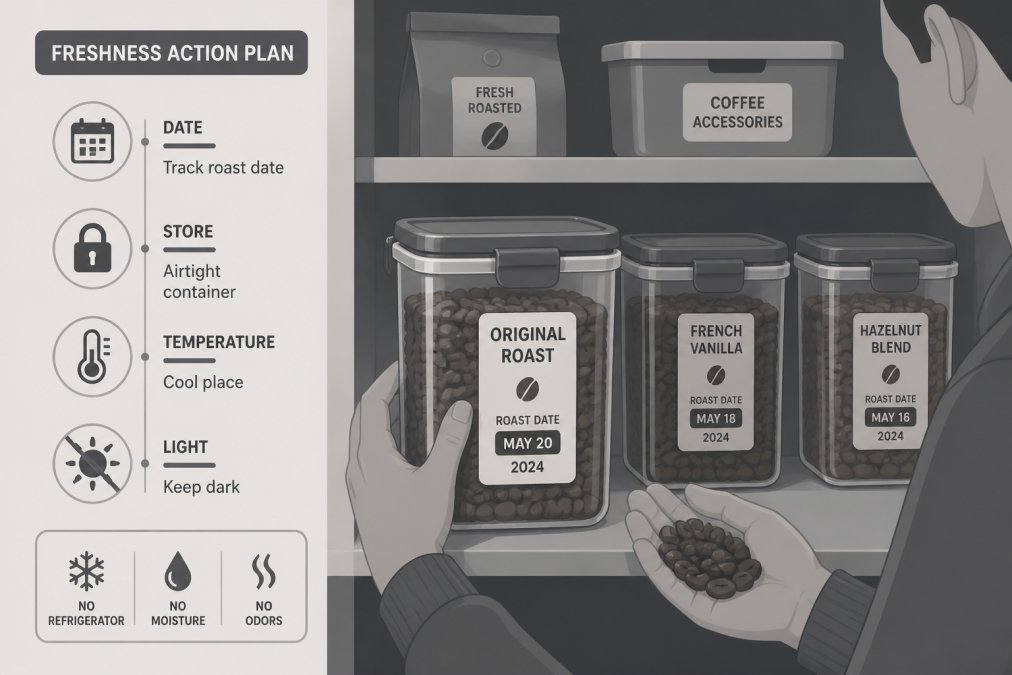
Step 6: For longer storage, freeze properly. If you won't use beans within 4 weeks, transfer them to a vacuum-sealed bag or airtight container and freeze. Remove only what you need for 2-3 days at a time, allowing sealed containers to warm to room temperature before opening.
Keeping coffee fresh longer is fundamentally about controlling the four enemies of freshness: oxygen, light, heat, and moisture. The most effective approach combines whole-bean purchases, airtight opaque storage, cool dark placement, and grinding on demand. When you prioritize freshness, every cup tastes noticeably better, brighter, more complex, and more satisfying.
The Last Sip Coffee Roasters eliminates one major freshness variable by roasting to order and shipping directly to your door. Our Original Roast Coffee Capsules - 12 Pack deliver fresh, premium coffee in convenient single-serve format, perfect for busy mornings when you want cafe-quality flavor without the complexity of brewing whole beans. For those who prefer larger quantities, our Premium Coffee Capsules - 60 Pack offers the same freshness advantage at a better value. Start with proper storage habits today, and experience how dramatically freshness affects the taste of your daily cup.


Frequently Asked Questions
What is the best way to store coffee for a long period of time?
Store whole beans in an airtight container with a one-way valve in a cool, dark pantry away from heat and sunlight. Keep the container opaque to block UV light, which accelerates oxidation. If storing longer than 2-3 weeks, freeze beans in a vacuum-sealed bag to slow degradation of volatile compounds and preserve aroma. Avoid the refrigerator, which causes condensation and moisture damage.
How long does coffee stay fresh after roasting?
Coffee peaks in flavor 5-14 days after the roast date as carbon dioxide degasses naturally. Whole beans stay fresh for 2-4 weeks if stored properly in an airtight container. Ground coffee degrades faster due to increased surface area exposed to oxygen, staying fresh 1-2 weeks. Beyond 4 weeks, beans don't spoil but lose aroma and subtle flavor notes. Check the roast date on your package to track freshness.
Does freezing coffee beans actually keep them fresh?
Yes, freezing slows oxidation and preserves volatile compounds that create aroma and flavor. Freeze whole beans in a vacuum-sealed bag to prevent freezer burn and moisture exposure. Remove only the amount you need, then return the rest immediately to the freezer to avoid repeated thawing and condensation. Frozen beans stay fresh 3-6 months, but grind them while still cold to minimize air exposure and maintain flavor profile.
Will coffee stay fresh in a Ziploc bag?
Ziploc bags are not ideal for long-term storage because they lack an oxygen barrier and allow air exposure over time. They work for short-term storage (up to 1 week) if sealed tightly and kept in a cool place, but airtight containers with one-way valves preserve freshness far better. For premium, freshly roasted beans, invest in a proper storage vessel to protect your investment and ensure every cup tastes its best.
How do I store a large bag of coffee without it going stale?
Divide a large bag into smaller portions in separate airtight containers. Store one container in your pantry for daily use, and freeze the rest in vacuum-sealed bags. This limits air exposure each time you open a container and keeps the bulk of your supply fresh longer. Whole beans stay fresher than pre-ground, so grind only what you need. Label each container with the roast date to track freshness.
What temperature and humidity level is best for coffee storage?
Store coffee at 50-70°F in a cool, dry pantry away from heat sources and direct sunlight. Humidity should stay below 50% to prevent moisture absorption, which causes mold and flavor degradation. Avoid kitchens near stoves or dishwashers where heat and steam fluctuate. A dark closet or pantry away from appliances is ideal. If you live in a humid climate, freezing beans in vacuum-sealed bags prevents moisture damage better than room-temperature storage.
Is old coffee still safe to drink?
Coffee doesn't spoil or become unsafe to drink due to age. Roasted beans are shelf-stable and don't harbor bacteria. However, 2-year-old coffee loses flavor, aroma, and volatile compounds through oxidation and degassing, resulting in a flat, stale taste. While technically safe, old coffee won't deliver the rich, smooth cup you expect from freshly roasted beans. For the best experience, use beans within 4 weeks of the roast date and store them properly in an airtight container.
This article was written using GrandRanker